
Anatomy of an answer
The models themselves, the chips they run on, and the buildings that house them.
The foundation model
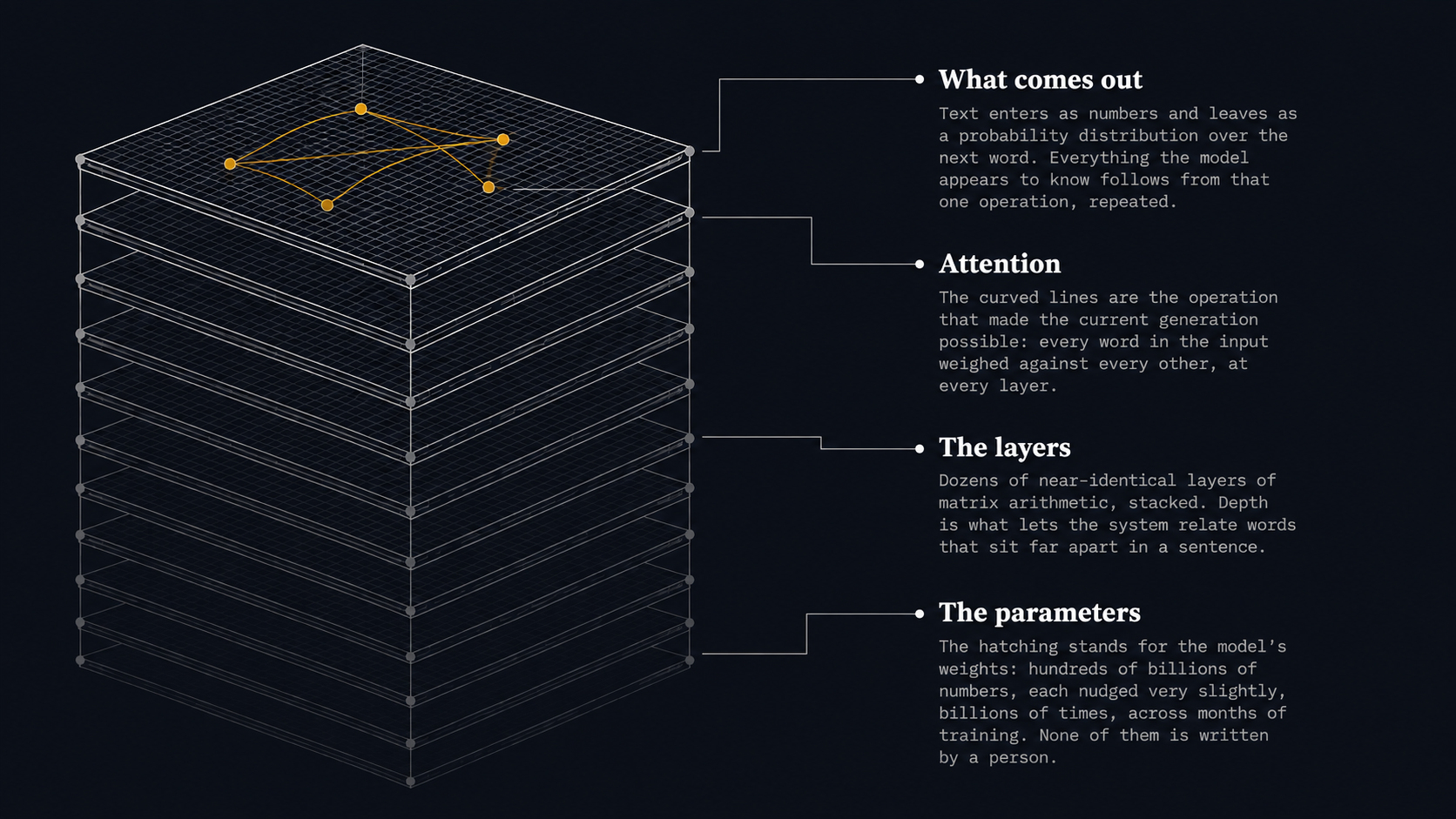
Europe is present at this layer without being at its centre. Mistral reached a €11.7bn valuation in September 2026 — the fastest ascent in French tech history — and its largest shareholder is now ASML, the Dutch lithography maker from layer 05, which put in €1.3bn. DeepMind was founded in London in 2010 and sold to Google in 2014.
What’s being done: InvestAI, announced in February 2025, is the Commission’s attempt to fix the compute constraint. In practice it works like this. The headline €200bn is a mobilisation target, not a cheque: roughly €50bn of EU money — largely repurposed from existing programmes such as Digital Europe, Horizon Europe and InvestEU — is meant to attract about €150bn in private investment. Inside that, €20bn is ring-fenced for four to five AI gigafactories. Despite the name these are not chip plants but very large computing sites, each planned with around 100,000 advanced AI chips, about four times the size of the EU’s current AI factories. Public grants would cover roughly a third of each site, private investors the rest. The aim is that a European startup or university lab can rent frontier-scale computing power instead of that capacity existing only inside the largest American firms.
« Si l’IA européenne se résume à Mistral, alors nous sommes fichus. »
Europe has two model labs of real standing, and one of them now carries most of the continent’s expectations on its own. Their constraint is access to computing power and to capital at the scale their American competitors raise it — both of which sit in layers further down this stack.
AI accelerators
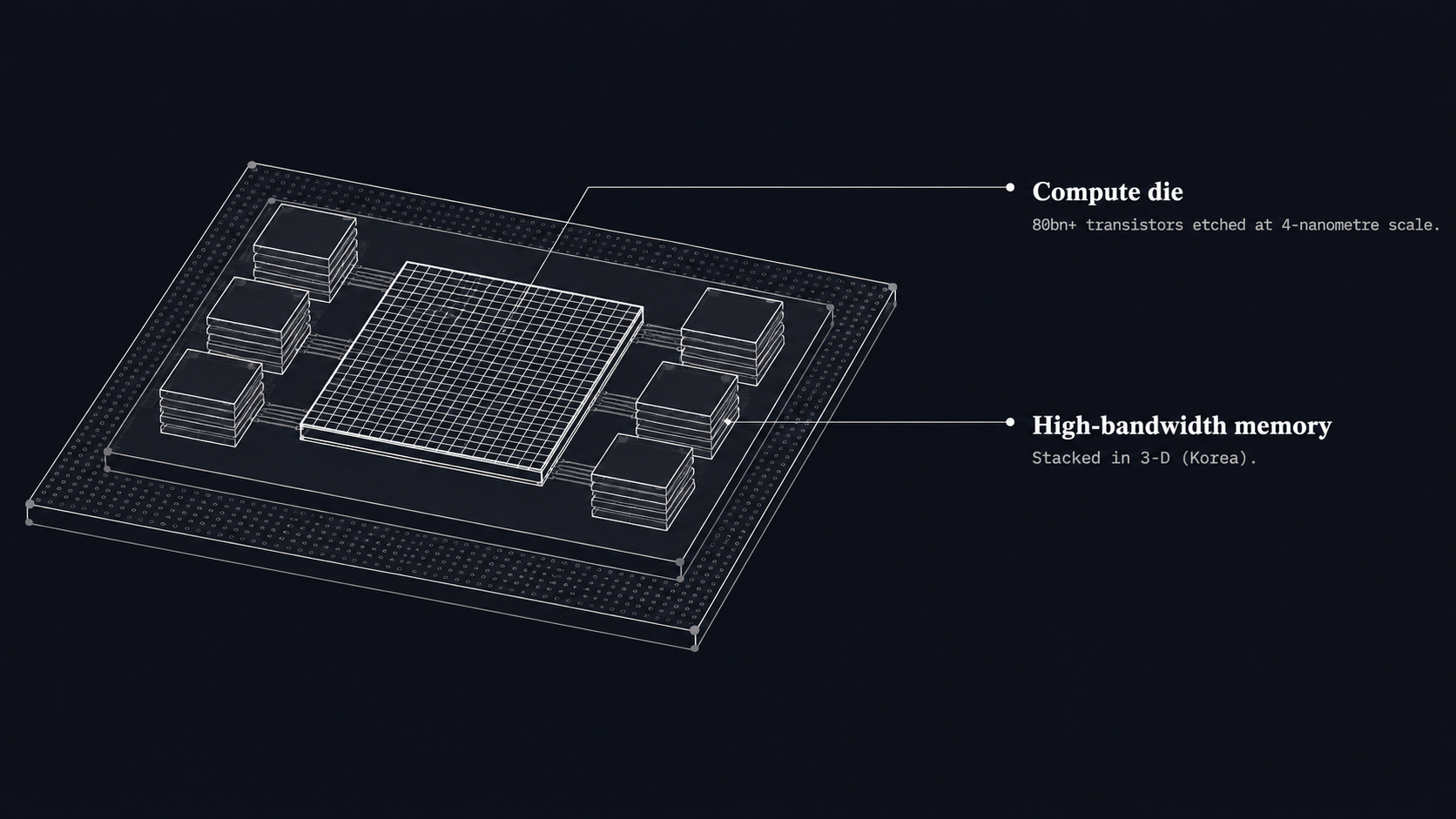
Europe designs world-class processors — the Arm architecture inside most phones was created in Cambridge — but no European firm builds frontier training chips. The most serious attempt, Bristol-based Graphcore, was acquired in 2024 by SoftBank of Japan. What's being done: the EU-funded SiPearl (France) is building European processors for supercomputers, and the newest machines of EuroHPC (the EU joint undertaking that funds, owns and operates Europe’s public supercomputers) pair those European processors with Nvidia accelerators for the AI workloads. There is no European alternative at the training frontier today.
Every European lab, university and government buys its training hardware from the same US supplier — so Europe's access to compute is set by American export policy, not European policy.
Data centres
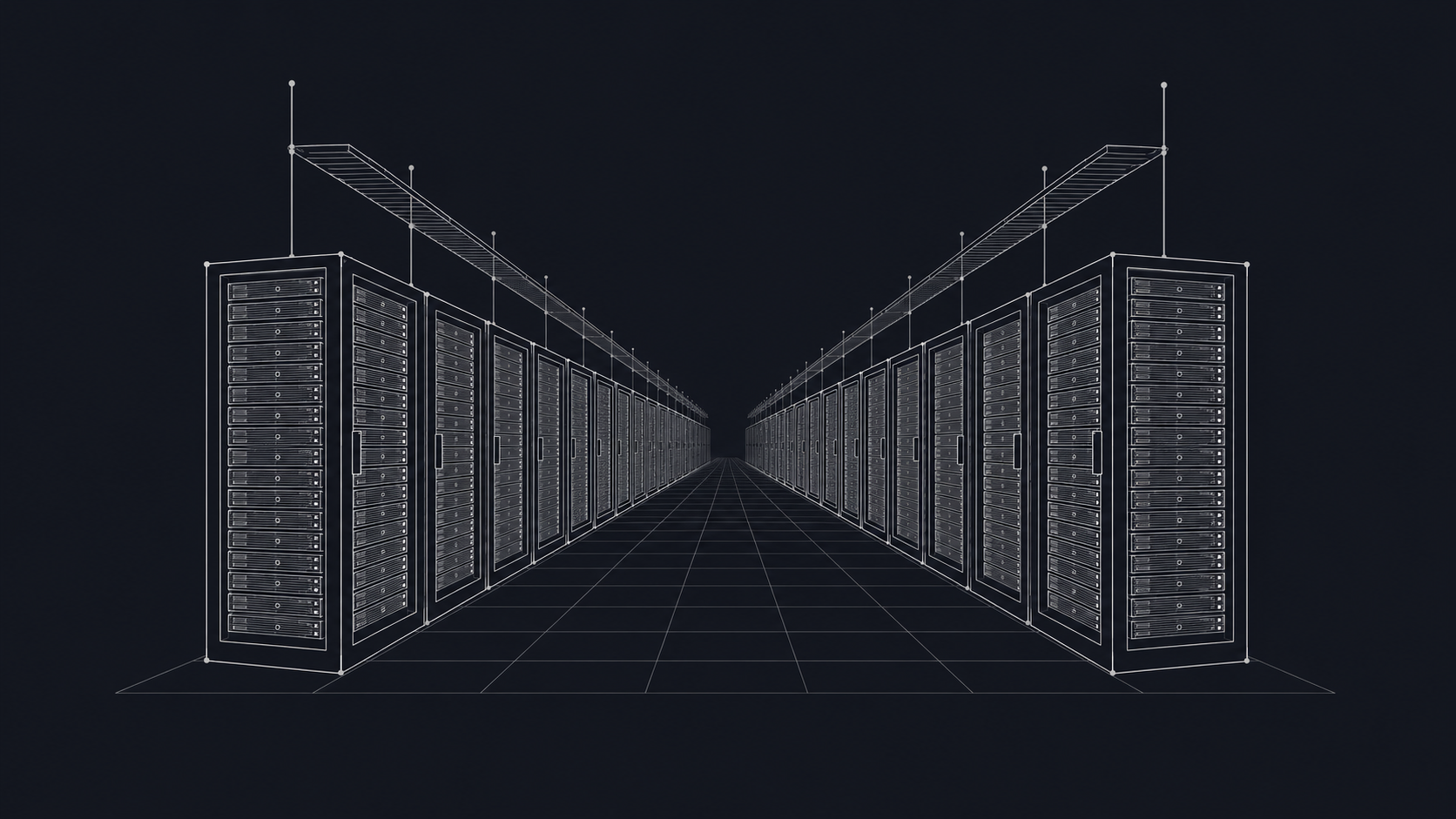
The three American firms are Amazon Web Services, Microsoft Azure and Google Cloud. The European alternatives exist but are an order of magnitude smaller: OVHcloud (France, the largest EU-headquartered provider), Scaleway (France, part of Iliad), IONOS and StackIT (Germany, the latter owned by the Schwarz group behind Lidl), Hetzner (Germany), Open Telekom Cloud (Deutsche Telekom), Aruba (Italy) and UpCloud (Finland). Two distinctions matter here. Cloud providers sell computing; data-centre landlords rent floor space, and Europe’s largest halls are largely operated by American groups such as Equinix and Digital Realty even when the building sits in Frankfurt or Amsterdam. And a European flag on the provider does not by itself change which chips are inside — those come from layer 02 regardless.
In Ireland, data centres consumed 23% of all metered electricity in 2025, up from 5% a decade earlier — the highest national share recorded anywhere.
What’s being done: the AI gigafactories described in layer 01 are the main answer, and the scale gap they would close is worth stating in plain numbers. Europe’s largest public AI machine, JUPITER at Jülich, runs on roughly 24,000 accelerators. Each planned gigafactory is specified at around 100,000. The largest American training clusters already operate in the range of several hundred thousand and are still growing. So the programme would move Europe from roughly a twentieth of frontier scale to something nearer a fifth — a genuine improvement that still leaves European labs training on less hardware than their competitors, and it depends on private investors funding about two-thirds of each site.
Most European data, including public-sector data, is processed on infrastructure operated by American companies. The planned gigafactories would narrow the gap in computing capacity without closing it.
How chips are manufactured, and the one machine in the process that Europe controls.
Coming soon.