The events
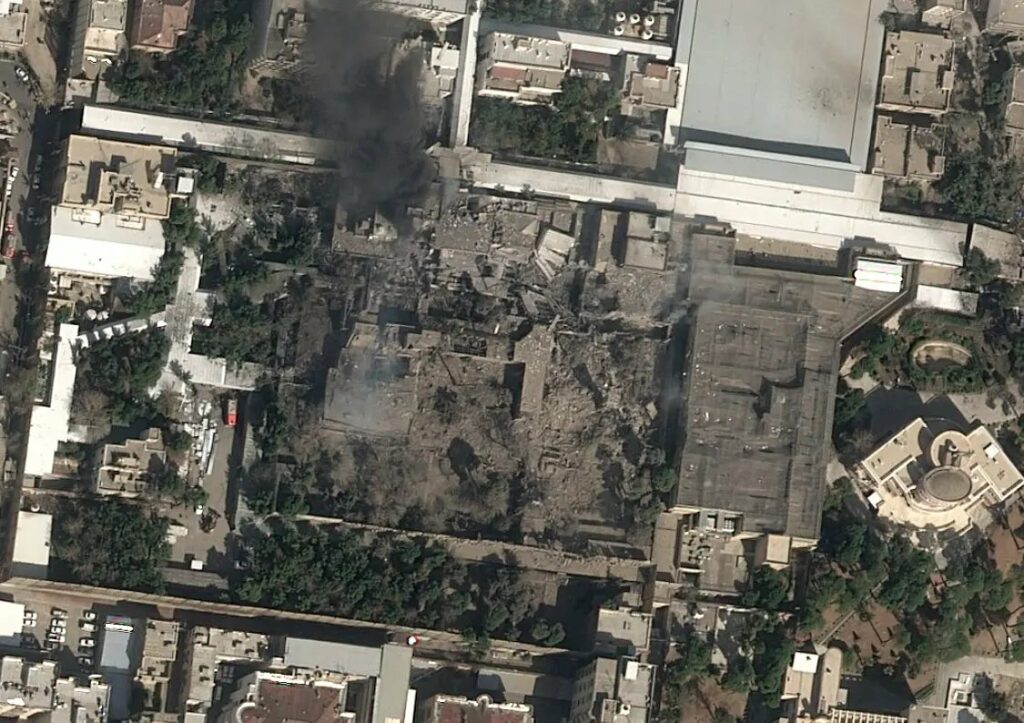
Early in the morning of 28 February 2026, the United States and Israel launched a coordinated air campaign against Iran, hitting senior command nodes and major military and nuclear-related sites. The operation quickly escalated into a region-wide exchange of fire.
The most consequential reported outcome is the confirmed death of Iran’s Supreme Leader, Ali Khamenei — an unprecedented decapitation event for the Islamic Republic. This introduces immediate succession uncertainty and raises the probability of either intensified repression, a hardline security consolidation, or a less predictable fragmentation of authority.
Iran’s retaliation has not been confined to Israel. Strikes have reportedly targeted US facilities and interests across the Gulf region, increasing the risk that the conflict becomes a multi-theatre confrontation involving Gulf partners and critical infrastructure.
Europe has not been spared from the consequences of the escalation. Reports point to retaliatory fire towards the British Royal Air Force base of Akrotiri in Cyprus, the targeting of the French naval base in the UAE, and strikes directed at facilities in Bahrain, where Italian and British personnel were hosted.
Europe’s stance so far
While escalation has been brewing since the US “Operation Midnight Hammer” strike on Iran’s nuclear sites in June 2025, multiple European leaders have emphasised that they were neither involved in nor fully informed about the planning of the subsequent US-Israeli operation. Most notably, French President Emmanuel Macron stated that France was neither consulted nor informed in advance.
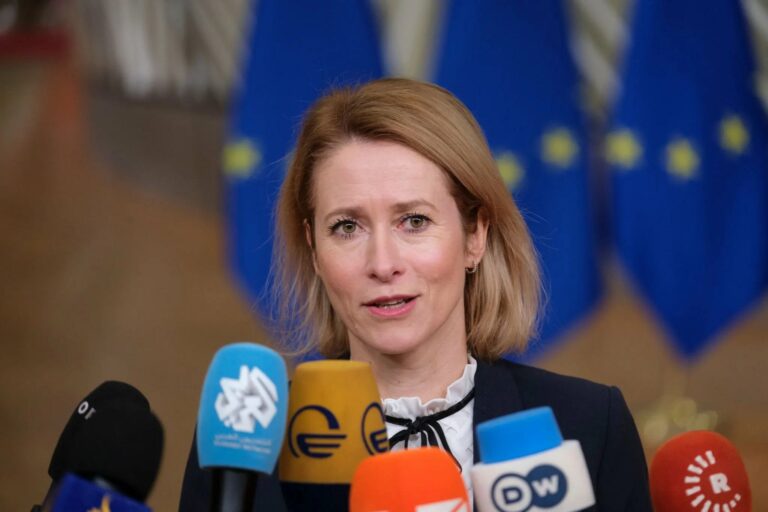
Overall, Europe’s institutional response has so far focused on the risks of wider escalation and the primacy of diplomatic channels, including engagement with Arab partners, while avoiding explicit condemnation of the US-Israeli operation. The EU’s High Representative for Foreign Policy, Kaja Kallas, convened foreign ministers for an informal videoconference on 1 March to discuss the situation. Commission President Ursula von der Leyen is presiding over a special Security College on 2 March, signalling an effort to forge a common EU line and coordinate immediate steps.
Notably, Eastern European countries including Poland and several Baltic states framed the events within a broader security lens, emphasising transatlantic coordination and reminding partners not to lose sight of Europe’s eastern flank.
While early national reactions have generally sought to “thread the needle” — distancing themselves from the US-Israeli strikes while reiterating long-standing European red lines on Iran, including nuclear escalation, ballistic missiles and regional destabilisation — the leaders of France, Germany and the UK (the “E3”, central to the 2015 Iran nuclear negotiations) issued a joint statement urging Iran towards a negotiated solution and warning of potential defensive responses following attacks such as those directed at the British base in Cyprus.
Taken together, this positioning reflects the core of European dilemma: leaders share the objective of preventing a nuclear-armed Iran, but the memory of Libya and enduring instability in the Middle East counsel against regime-change actions and involvement in a conflict whose legality and regional spillovers remain uncertain.
The stakes
European troops, diplomats and civilians in the Middle East now face elevated risks from Iranian targeting. Several EU Member States maintain military deployments in Iraq and the Gulf. Protecting these personnel is an immediate operational priority.
Geography also matters. Crete and Cyprus — the latter located roughly 1,500 km from Iran’s western border, a distance comparable to that between Paris and Bucharest — are not distant outposts. They serve as logistical hubs for the US and could be exposed to Iranian strikes.
Additionally, Europe’s energy security remains exposed primarily through price and logistics shocks rather than direct dependence on Iranian supply. The EU does not import significant volumes of Iranian oil. However, it remains structurally dependent on global crude and petroleum markets. Any disruption in the Gulf translates into higher prices. Europe’s diversification away from Russian energy has increased reliance on Gulf suppliers, making prolonged instability a direct risk for inflation, industrial costs and economic stability.
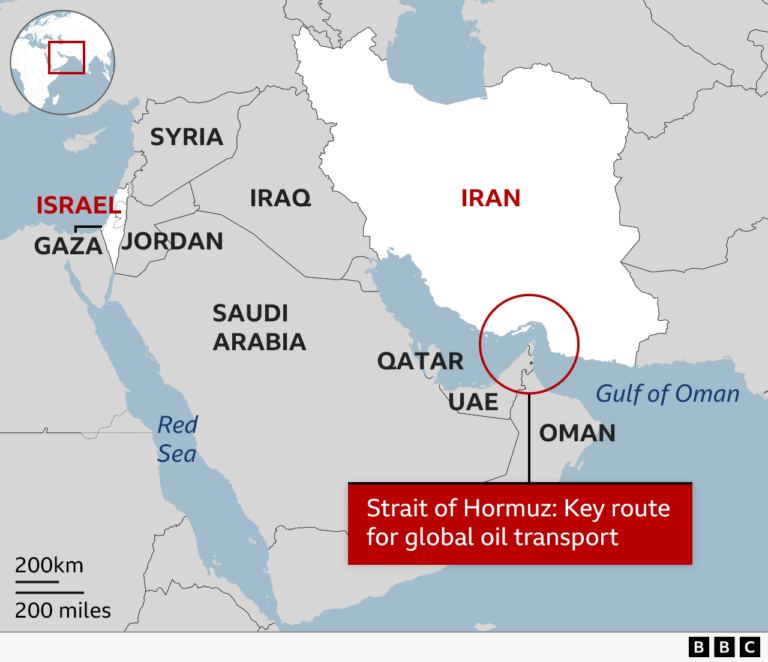
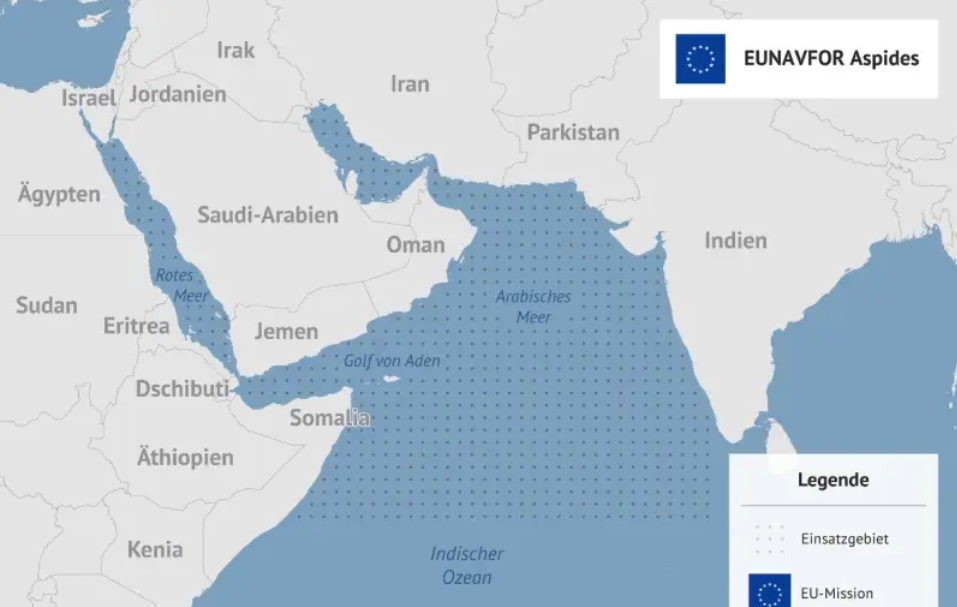
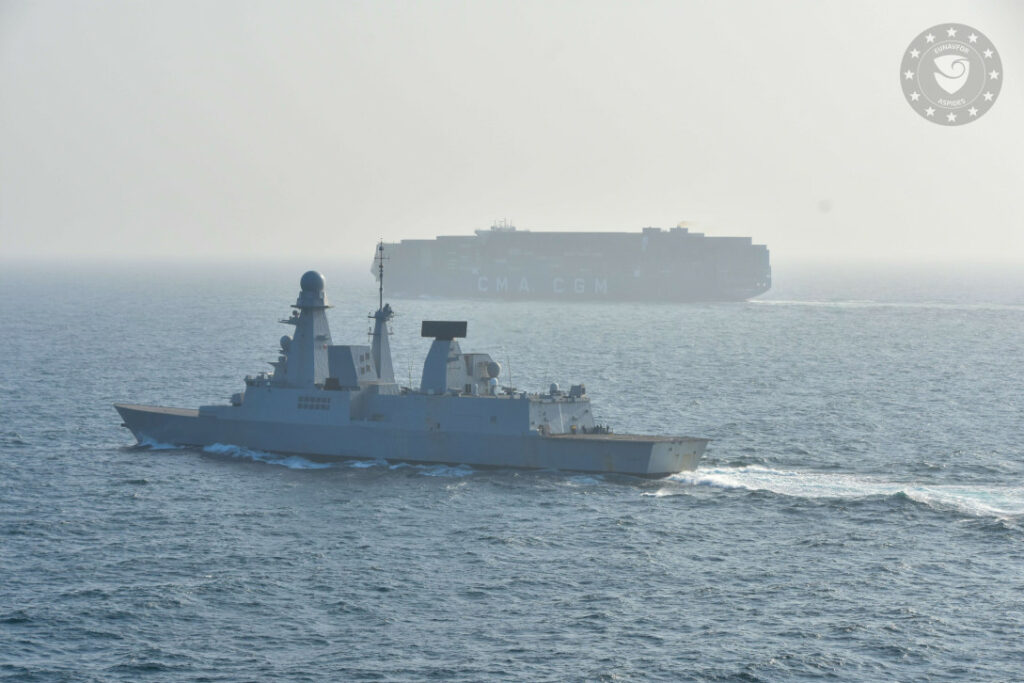
The Strait of Hormuz and the Gulf of Aden — two critical arteries for European trade — now face heightened risks from rerouting, rising war-risk insurance premiums and port congestion. Even without physical destruction of infrastructure, shipping costs are likely to rise, affecting European supply chains and consumer prices. The EU naval mission Operation Aspides, launched in February 2024 to protect international shipping in the Red Sea, has been placed on maximum alert. Its mandate to safeguard maritime corridors is now strategically central if regional spillover intensifies.
The most consequential risk for Europe is political instability inside Iran itself, in the context of an unclear US strategy for the conflict: a power vacuum, elite fragmentation or prolonged internal unrest would not remain contained within Iran’s borders. Iran is deeply embedded in regional networks — from Iraq and Lebanon to Syria and Yemen — and internal destabilisation could trigger proxy escalation and wider regional disorder. In a country of nearly 90 million people, sustained instability would also risk generating displacement flows, with Europe geographically exposed to secondary migration pressures.
At the same time, fragmented authority over Iran’s nuclear programme and conventional arsenals would increase proliferation risks and strategic uncertainty. For Europe, the core interest is therefore not only preventing impacts on its immediate interests, but also avoiding uncontrolled state collapse. A chaotic Iran would pose a long-term security and economic riddle.
The short term challenges
For Europe, the challenge for the coming days and weeks is threefold.
First, ensuring internal alignment. European states’ positions range from emphasising legality and de-escalation to stressing transatlantic solidarity and Israel’s security. While the EU institutions’ direct capacity to shape fast-moving security crises beyond its borders remains limited — often confined to diplomatic signaling and coordination — internal cohesion among its Member States will be essential to navigate and anticipate the consequences of the escalation, and to preserve leverage in any scenario.
Second, maintaining readiness to ensure the protection of its personnel, infrastructure and economic interests in the region. This includes coordinating intelligence sharing, strengthening air and missile defence, and preparing evacuation frameworks if required. The credibility of European external action is directly tied to its capacity to protect its own citizens and interests.
Third, making full use of diplomatic leverages. Europe retains channels with Gulf states, Israel and, critically, indirect lines connected to Iran. While direct involvement in the confrontation has been excluded at this stage, the EU can still play a stabilising role in limiting further escalation and containing regional spillover.
To conclude, it should be noted that the death of Iran’s Supreme Leader introduces structural uncertainty but not automatic regime collapse.
The coming weeks will determine whether the crisis consolidates internal Iranian power, triggers broader regional war or brings to a complete re-shaping of the Iran’s leadership. In the three cases, Europe will have to make sure to influence the outcomes of the events through its collective strength in defence of its security and economic interests.